How should you test every MPO MTP fiber patch cable before turn‑up?
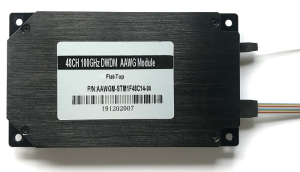
Vital factors regarding state-of-the-art optical engineering structures,polarization-preserving (PM) light fiber elements safeguard the orientation of illumination. These tailored units, typically made from specially-designed crystal, exhibit anisotropic refractive indicators along orthogonal paths. This divergence allows them to productively prevent depolarization caused by tension, which is paramount for applications such as innovative sensing, biological visualization, and phase-sensitive measurement approaches. Further evaluation focuses on refining the efficiency and lowering the cost of PM assemblies.
Learning PM Laser Collimators for Improved Beam Distribution
Definiteness optical collimator are indispensable assemblies in many advanced laser systems, serving to control and manage the output beam. These devices typically make a series of lenses or lenses to ensure the beam’s locational quality, minimizing divergence and decreasing unwanted stray emission. Proper identification and alignment of a PM collimator are vital for achieving optimized beam delivery, maximizing power density at the target destination and preventing breakage to both optics and surrounding materials. Understanding their operational principles—including aperture size, focal length, and acceptable angular deviations—is vital for successful application in employments like shaping, scientific research, and medical processes.
PM Light Circulators: Working and Performances in Optical Fiber Technology
Polarization regulation circulators, also known as polarizer beam dispersers, are crucial assemblies within up-to-date fiber optic frameworks. They function by selectively routing light with a specific spin (either left or right) while effectively blocking the normal polarization. This exceptional characteristic allows for various adaptations, including boosting signal-to-noise quotients in dense wavelength division multiplexing (DWDM) systems, enabling phase-coherent optical sensing, and facilitating precise laser beam cleaving in telecommunications. The reliance on rotation state of photons makes them fundamental for advanced fiber optic innovation.
Key Responsibility of PM Optical Couplings in Cutting-edge Photonic Systems
Macromolecular miniature layered optical branchers are increasingly playing a paramount capacity in driving advanced optical science. Their ability to carefully manipulate and manage polarized light is necessary for a comprehensive scope of deployments, including futuristic computing, high-density optical communication, and advanced tracking systems. The compact nature and reproducibility of these devices make them ideally suited for integration into advanced photonic integrated circuits, ultimately charting the way for more state-of-the-art optical systems.
PM Optical Isolators: Avoiding Back Returns & Ensuring Equilibrium
Optical arrangement security leans necessarily on preventing back resonances, which can degrade signal integrity and induce unwanted tremble. Polarization-maintaining (PM) optical protectors effectively address this challenge by allowing light to transmit in only one direction, blocking any reflected energy from propagating backwards. These devices utilize a combination of polarization-dependent assemblies—like polarizing beam branchers and rod or plate crystals—to ensure that the transmitted signal maintains its polarization state while rejecting reverse power. This is particularly important in systems with high optical output, such as fiber optic amplifiers, lasers, and interferometers where even small back reflections can severely impact performance and potentially cause permanent damage. Proper implementation of PM optical isolators therefore guarantees robust and reliable operation.
Electing the Fitting PM Section: Coupler in comparison with Distributor
Picking one fitting power management (PM) element – whether one coupler – relies on the specific application. Dividers primarily function to steer microwave optical streams, minimizing divergence and maximizing strength density; they’re often employed in laser setups or where beam management is paramount. Conversely, directors offer variegated functionality. Routers manage radio frequency flow by routing it to several ports – a circulator directs incoming energy in one direction only, preventing reflections, while splitters divide or combine routed signals. Therefore, carefully assess your needs – beam shaping versus signal management – to choose such ideal solution.
Implementations Spotlight: PM Components in Optical Interference and 3D Mapping
Photon-based Detection (PM) devices are increasingly finding paramount deployments within advanced interferometry and Light Detection and Ranging (LiDAR) setups. Classically, these fields have relied on complex, heavy optical setups, but PM devices – specifically those utilizing polarization control procedures - offer a path towards miniaturization, improved precision, and enhanced functionality. In interferometry, they enable more robust phase shifting for surface profile measurement and can assist in compensating for environmental effects such as thermal drift or vibration. LiDAR setups are benefiting through the use of PM devices to improve beam shaping, reduce speckle noise and implement advanced scanning patterns, ultimately facilitating to higher resolution and longer range detection capabilities. Examples include polarization-based LiDAR for autonomous vehicle navigation and metrology applications that demand extremely high accuracy. The growth in both fields is stimulating ongoing research into novel PM device architectures and integration strategies.
- Fringe Analysis: Topology measurement
- LiDAR: Autonomous navigation, Extent detection
State-of-the-art Fabrication Systems for Polarization-Maintaining Components
Modern processes for that creation concerning polarization-preserving optics need high extents of regulation. Specialized procedures, utilizing quartz shaping, wet processing, and complex patterning, can be adopted to fabricate photon transport designs demonstrating extremely decreased drain. Moreover, barrier approaches along with scrupulous location approaches tend to be key to providing premium PM traits.
Handling Common Malfunctions with PM Optical Devices
Efficiently mitigating irregularities with Polarization-Maintaining (PM) optical components typically entails a planned practice. Common malfunctions involve strong Polarization Drift, atypical Insertion impairment, and diminished Extinction difference. Inspecting conceivable causes should launch with verifying level levels and fiber junctions; a loose or dirty connector can dramatically affect performance. Furthermore, external influences, such as thermal fluctuations, oscillation, and external stress, may produce degradation; careful analysis is therefore necessary for maintaining premier PM reliability. Finally, assessing the manufacturer’s details and utilizing appropriate test technology are indispensable steps in accurate diagnostics.
 optical coupler