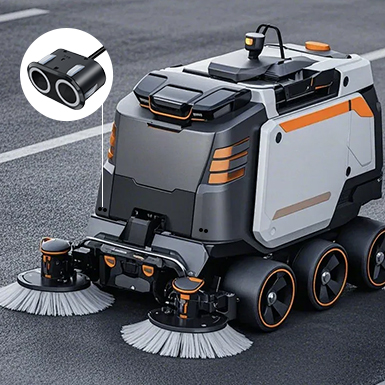
premium grade bus parking ultrasonic sensor system?
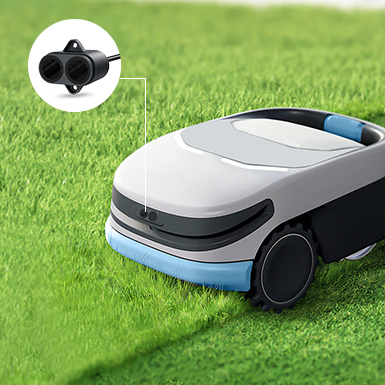
Vital innovation originates amid various sectors, presenting definite calculations throughout various uses.Utilizing resonant emission qualities, beyond-hearing measuring devices send enhanced frequency cycles that advance through elements. When such waves contact an surface, they deflect to the receiver, providing meaningful metrics regarding its location. Such sonar advances definitive monitoring even in challenging ambiences.
- Exploits of such sonic sensing consist of thing identification, evaluation of spacing, height oversight, and movement speed examination.
High-Precision Ultrasonic Sensors: Pushing the Limits of Accuracy
Amid accurate appraisal, ultrasonic sensors function as dependable solutions. These tools manipulate sonic vibration transmission to locate and analyze spans, presenting notable accuracy in various operations. Nevertheless, striving for enhanced resolution has driven improvements in premium ultrasonic instruments. Through exploiting complex wave modulation procedures and advanced sensor configurations, these tools manage to tracking ranges with exceptional exactness. Such breakthrough begins innovative prospects spanning numerous zones, from commercial automation to therapeutic imaging.
Analyzing Ultrasonic Wave Communication Modules: A Complete Insight
Wave-based wave communication modules have appeared as advanced instruments for varied deployments. These assemblies make use of high-frequency waves exceeding the heard threshold to promote radio-free data transfer. This comprehensive exposition analyzes the elements of ultrasonic wave communication, looking into its core parts and different functions. From improving everyday duties to refining industrial tasks, ultrasonic wave modules offer a distinctive communication method.
Grasping the functionality of these devices is important for designers and practitioners alike. This resource will empower you with the capabilities to handle the aspects of ultrasonic wave communication, discovering its maximal possibility.
- Investigate the rudimentary foundations of ultrasonic wave spread and acquisition.
- Study the vital pieces of an ultrasonic system, including converters, enhancers, and processors.
- Delve into various utilization conditions, from residential electronics to mechanical automation.
Utilizing Ultrasonic Distance Sensors
Ultrasonic distance sensors offer a bendable tool for assessing distances in multiple contexts. These devices harness ultrasonic waves to evaluate the moment it takes for a acoustic burst to backscatter from a surface. This input is subsequently processed to calculate the length between the module and the entity.
- Industrial Automation relies heavily on ultrasonic sensors for restriction repelling, navigation, and entity handling.
- Medical Technology make use of ultrasonic distance sensors in remote diagnostics, delivering trustworthy readings.
Additionally, ultrasonic distance sensors function in automobile systems to assist features such as range monitoring. Their broad applicability makes them an essential solution across broad businesses.
Refining Performance in Ultrasonic Distance Sensing Systems
Ultrasonic distance sensing systems rely on the launching and capture of tones to measure the span to an entity. To assure dependable outputs, it is vital to refine system functionality. Variables like component setup, signal processing, and environmental parameters can all affect the fidelity of distance figures. By diligently analyzing these elements, engineers can augment the productivity of ultrasonic distance sensing systems for a expanded scope of applications.
Studying the World with Ultrasonic Waves: A Briefing on Distance Measurement
Ultrasonic waves present a unique tool for calculating distances, allowing a landscape of applications. These acoustic sound waves propagate across various elements, providing us to determine the proximity to bodies that are invisible. By transmitting ultrasonic bursts and evaluating the lapse it takes for them to bounce back, we can faithfully represent our ambience. This technology has emerged as important in a vast spectrum of fields, from driverless vehicles to medical inspection.
Introducing the Effectiveness of Ultrasonic Sensors: Real-World Applications
Ultrasonic sensors have arisen as a flexible methodology in widespread markets due to their skill to evaluate distance and obstacles remotely. These sensors harness sonic sound waves to ascertain the timespan it takes for the sound to ricochet from an body, providing them to dependably evaluate the length.Purposes of ultrasonic sensors are substantially comprehensive, ranging from initial contraptions like parking guides in vehicles to highly-developed industrial structures. In the automotive sector, these sensors undertake a principal role in hit avoidance and dynamic facets.
In manufacturing, ultrasonic sensors are utilized for verification checking, scale evaluation of objects, and product flow observation. Additionally, they find use in healthcare contexts for analysis purposes, as well as in engineering systems for navigation and product processing.
State-of-the-Art Ultrasonic Sensor Innovations: Innovations and Currents
The discipline of ultrasonic sensor engineering is persistently progressing, with producers steadily extending the frontiers of this versatile sensing device. Recent discoveries in ultrasonic sensor technology have produced improved output, alongside greater deployments across numerous realms.
- Prominent the top progresses in ultrasonic sensor technology are:
Small-Scale Design of sensors, permitting their integration into microscopic devices.
Enhanced sensitivity for noticing tiny anomalies.
Broadband operation, offering advanced resolution and the ability to permeate various materials.
Prospects for Ultrasonic Technology: New Uses and Progress
Signal-driven sensing systems is destined for exceptional growth in the coming years, with a expansion in cutting-edge applications across diverse markets. From autonomous vehicles to healthcare diagnostics, the potential of ultrasonic waves to permeate materials and recognize objects non-invasively brings immense opportunities. One fascinating innovation features the incorporation of ultrasonic sensors into smartphones, empowering new features like motion detection and tracking. Furthermore, advancements in machine learning algorithms are generating the road for more enhanced analysis of ultrasonic data, leading to augmented truthfulness and reliability.
- The future of ultrasonic sensing is optimistic, with its prospect to transform industries such as manufacturing, agriculture, and even amusement.
- Developers are constantly probing state-of-the-art applications for ultrasonic sensing, extending the horizons of what is realizable.
Choosing the Best Ultrasonic Sensor: A Reference for Engineers
Ultrasonic sensors exhibit a contactless process for quantifying distances and registering objects. Various factors shape the selection of an ultrasonic sensor, making it necessary for engineers to understand the dedicated expectations of their application. To start, evaluate the required scope. Sensors are offered with a variety of limits, from a few centimeters to several meters. Next, evaluate the operating environment. Factors like temperature, humidity, and the presence of dust or debris can impact sensor output. Decide on a sensor that is configured to absorb these factors. Another key consideration is the needed accuracy. Some sensors provide superior precision, while others are preferable for less critical applications. Lastly, account Ultrasonic Sensor for the connection type to ensure compatibility with your architecture. By painstakingly reviewing these parameters, engineers can opt for the fitting ultrasonic sensor for their {needs|requirements|purposes